Trainings signup page
Industry
Ed-tech
Org
Internshala
Role
UX & UI Designer
Team members
N/A
Redesigned the training signup experience to reduce friction, clarify value, and guide users confidently from discovery to enrollment improving sign-ups by 7% in the first fold by simplifying decisions and setting clear expectations upfront.
My Role
Product Designer leading end-to-end UX for the training signup flow. I worked with product, engineering, and business teams to redesign the experience within existing backend and content constraints, focusing on clarity, trust, and conversion.
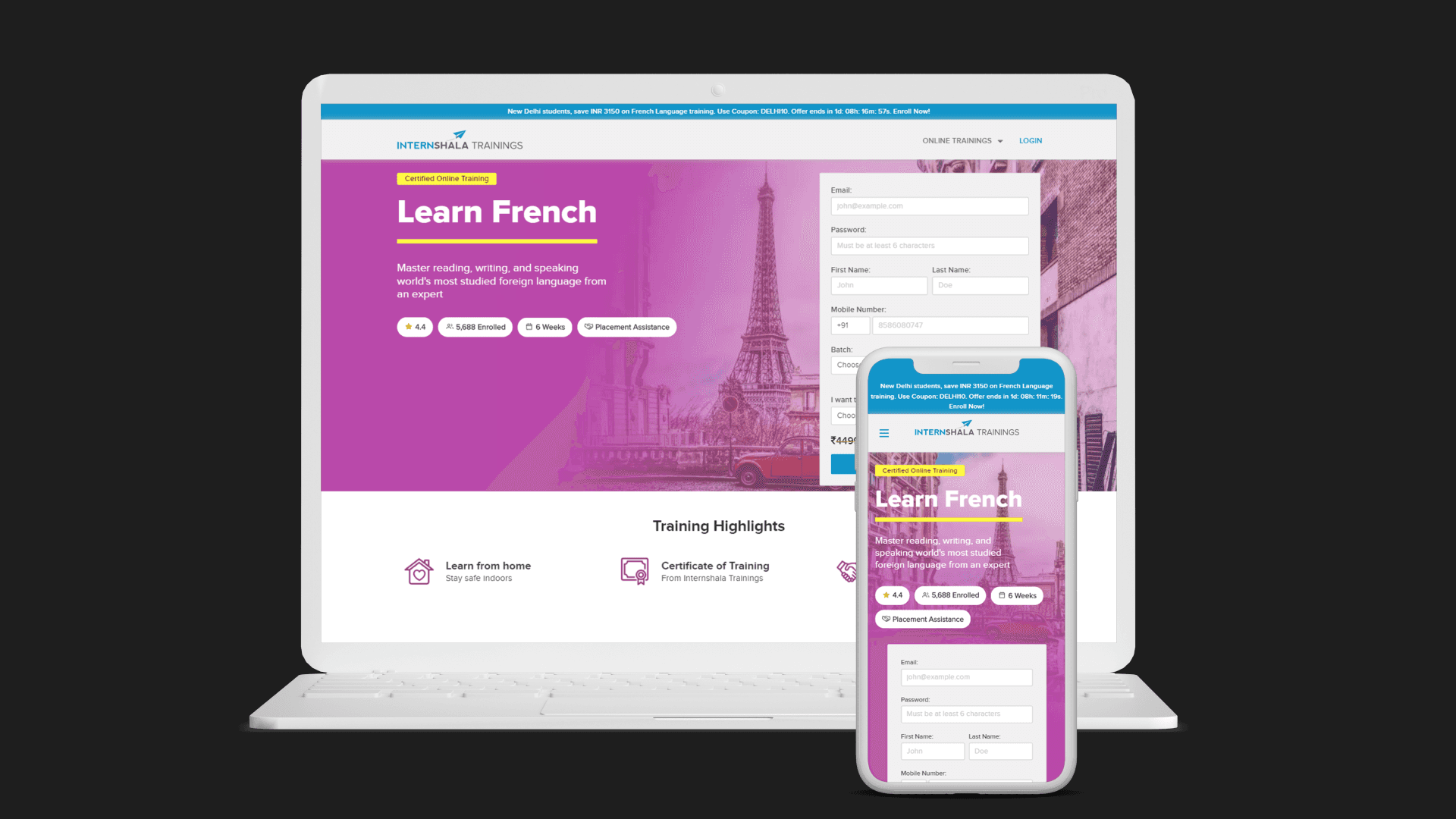
Problem
Users were asked to commit to a training program before they had enough confidence to decide.
Key issues included:
Critical value information was buried below the fold.
The page prioritized illustration over clarity.
Signup was positioned as the primary action instead of the outcome of understanding.
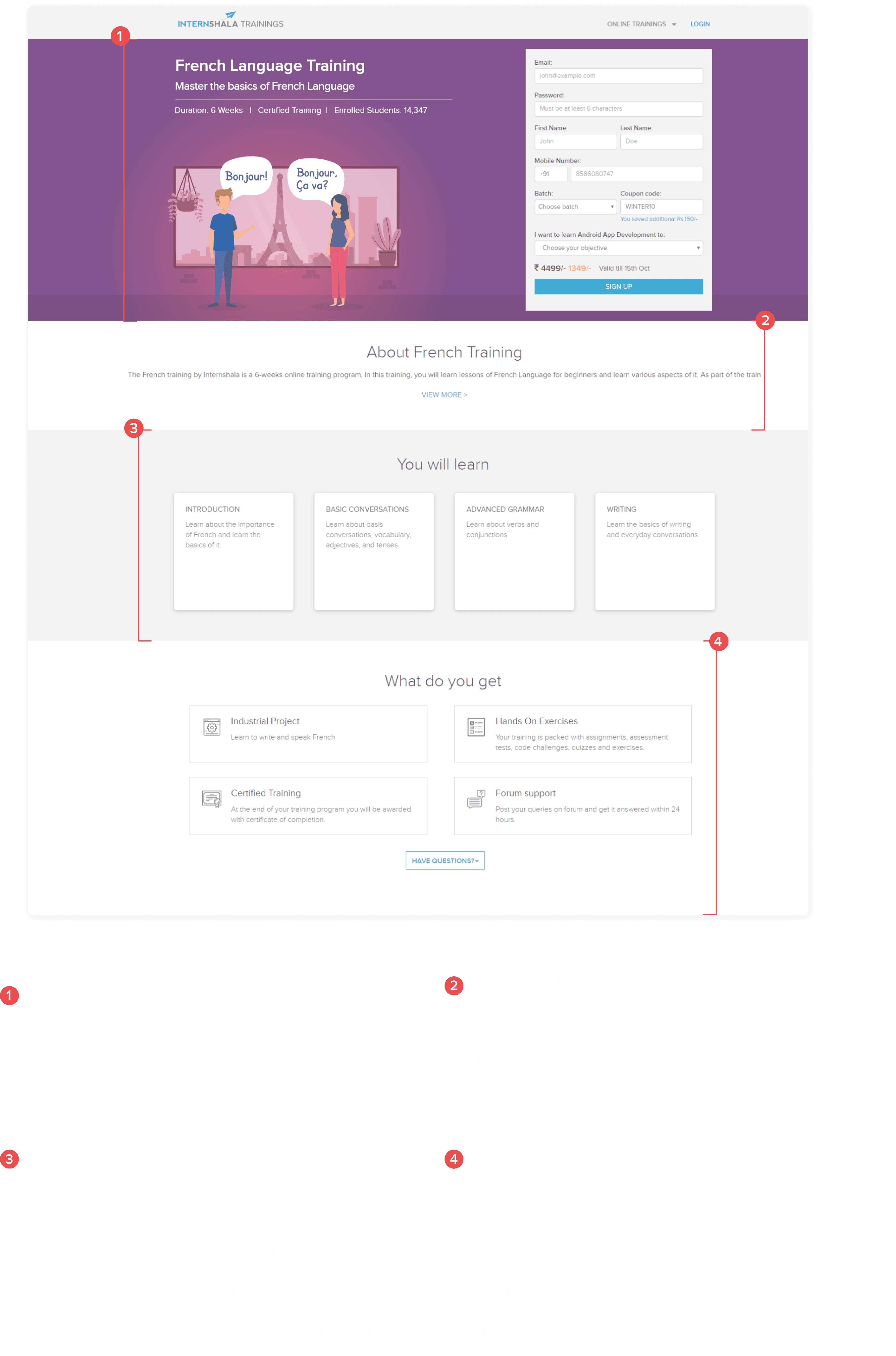
Key challenges included:
Page length made sequencing critical.
High ticket + long commitment increased decision anxiety.
Mobile users had even less tolerance for ambiguity.
As a result, users abandoned the signup flow even when interest was high.

Context & Constraints
The platform offered multiple trainings with varying formats and durations.
Training content, pricing, and eligibility rules were already defined.
The signup flow had to work across desktop and mobile.
Backend form logic and validation were already in production.
The redesign focused on experience and clarity, not changing business rules.
These constraints meant improving information hierarchy, messaging, and flow without altering the underlying signup system
Users & Goals
Primary Users
Students and early-career professionals exploring training programs
User Goals
Quickly understand what the training is about.
Know whether the training is right for them.
Feel confident before committing to sign up.
Complete signup with minimal friction.
The primary tension was balancing information depth with momentum too little reduced trust, too much delayed action.
Insights
Users don’t read to decide, they scan to eliminate uncertainty.
Clear outcomes mattered more than feature descriptions.
Length wasn’t the problem. Unstructured length was.
Trust signals (structure, clarity, guidance) reduced hesitation.
Step-by-step progression felt less overwhelming than a single long flow.
Commitment only works after confidence is earned.
Users don’t read to decide, they scan to eliminate uncertainty.
These insights shaped every design decision that followed.
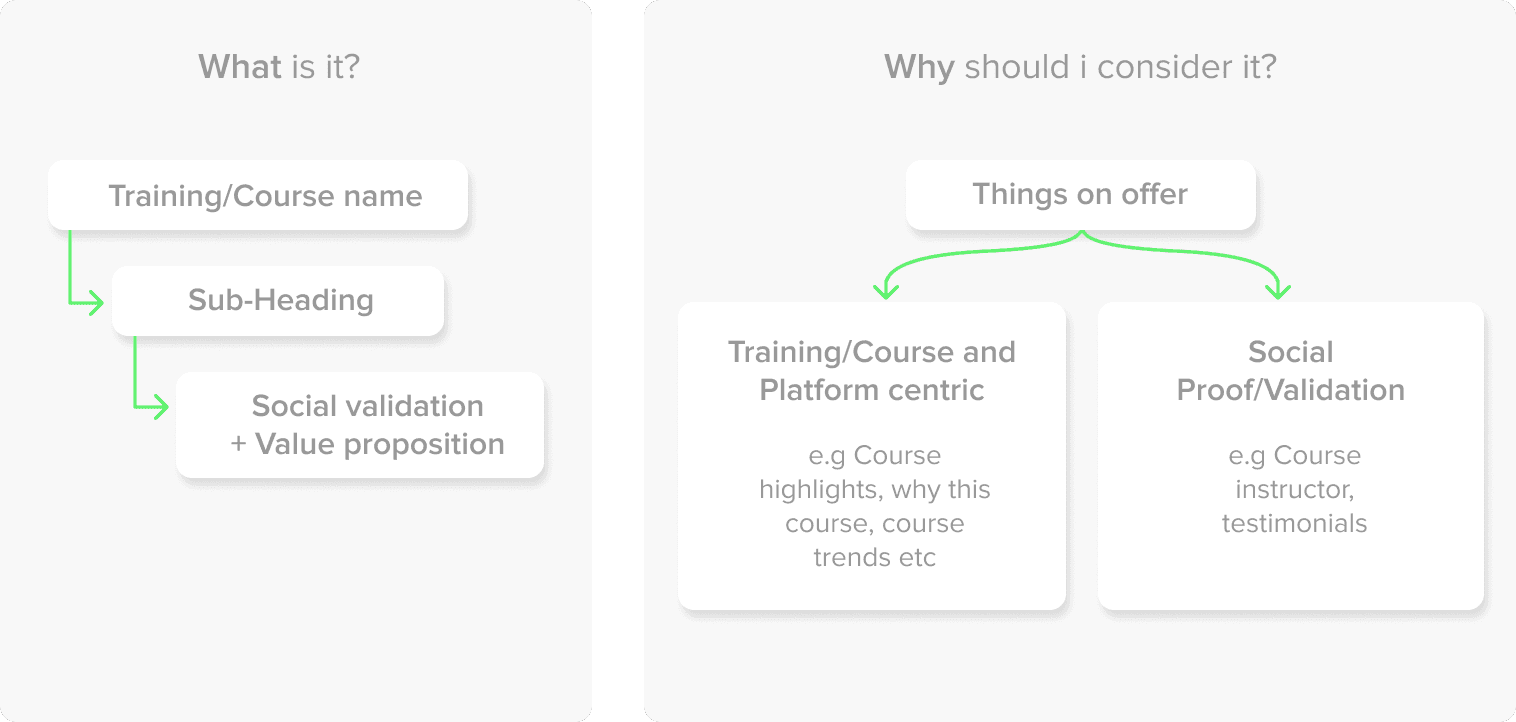
Design Strategy
Design principle:
Help users decide before asking them to commit.
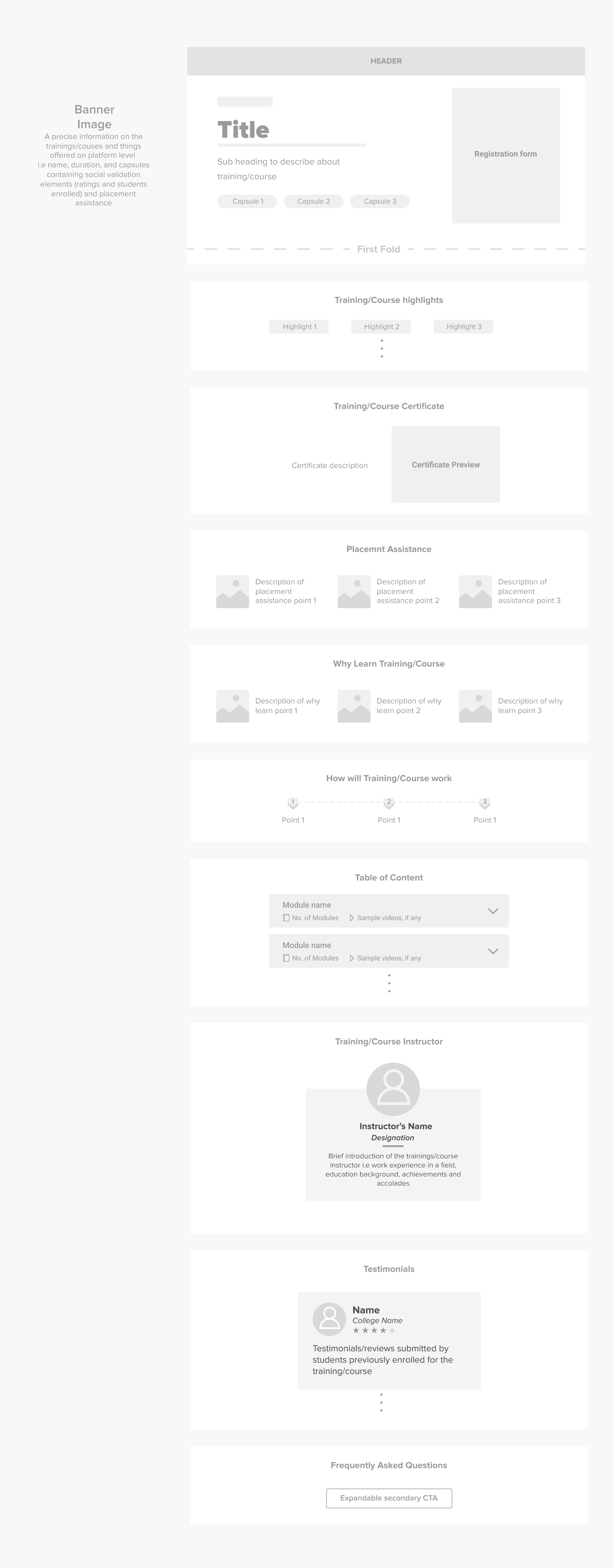
The solution focused on three principles:
Surface the most important information early
Reduce cognitive load before asking for commitment
Guide users through signup as a sequence, not a form
This meant treating signup as a decision journey, not just data collection.
Key Design Decision
Decision 1: Clear Value & Outcome Framing
Why:
Users needed to understand “what’s in it for me” quickly.
Tradeoff:
Less space for secondary details upfront.
Decision 2: Progressive Disclosure of Information
Why:
Reducing overload improved comprehension and confidence.
Tradeoff:
Required careful sequencing of content.

Persistent section navigation reduced cognitive load on long signup pages.
Decision 3: Contextual Signup Entry
Why:
Forms felt easier when users understood the training first.
Tradeoff:
Added steps before form submission.
Decision 4: Mobile-First Layout
Why:
Many users discovered trainings on mobile devices.
Tradeoff:
Required prioritizing content aggressively.
Solution Overview
Reorganized training information around outcomes and expectations
Simplified layout for faster scanning and understanding
Introduced clearer progression from discovery to signup
Reduced friction and anxiety during form completion
The solution shifted the page from a signup form with supporting content to a content-first flow where signup became a natural outcome.
Metrics Moved
Impact at a glance
Increased training signup conversions by 7%
Reduced drop-offs during the signup process
Improved user confidence before enrollment
Improvements were primarily driven by clearer value framing above the fold and delayed commitment until user confidence was established.
Learnings & Reflection
Signup experiences must address emotional hesitation, not just usability
Clear framing reduces friction more than removing fields
Decision confidence is as important as speed
If revisited, I would explore personalization based on user intent signals
One key learning was that adding more information didn’t increase trust — sequencing did. Early versions failed because they solved completeness, not confidence.